


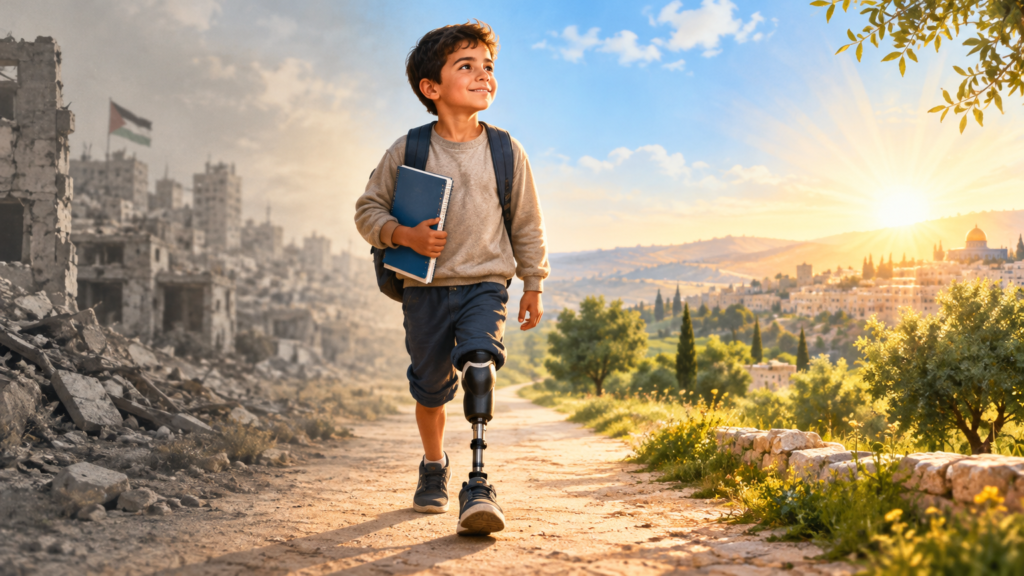
Beyond Survival
A better future for children in Gaza living with life-changing injuries and disabilities
A MEORF initiative exploring the urgent and long-term needs of children affected by conflict.
Beyond emergency care: children need a future
Children in Gaza have endured devastating consequences of conflict. For those who survive serious injuries, the challenges do not end when emergency treatment is over. Many face a long and difficult journey involving surgery, rehabilitation, assistive equipment, psychological support and access to education.
The World Health Organization (WHO) estimates that tens of thousands of people in Gaza have sustained life-changing injuries since October 2023. Children are among those most severely affected.
According to WHO’s May 2026 update, approximately 43,000 people had sustained potentially life-changing injuries. Up to one-quarter of those affected were children—approximately 10,000 children.
These figures reflect estimates based on available data and are not a final count. Injuries have continued to be recorded, and the overall needs remain substantial.
The scale of the rehabilitation crisis
WHO’s May 2026 report, Estimating Trauma Rehabilitation Needs in Gaza, highlights the extraordinary scale of the challenges:
- 172,043 people injured since 7 October 2023, according to data as of 1 April 2026.
- 43,011 people with potentially life-changing injuries, representing approximately one-quarter of all reported injuries.
- Approximately 10,000 children among those with life-changing injuries.
- More than 5,000 traumatic limb amputations estimated, with one in five amputees being a child.
- Approximately 49,500–55,900 injuries estimated to require extended rehabilitation.
These injuries include severe limb trauma, amputations, spinal cord injuries, major burns and traumatic brain injuries. They can have profound and lasting effects on children’s mobility, independence, education and quality of life.
Source: WHO, Estimating Trauma Rehabilitation Needs in Gaza, May 2026 update.
Children’s needs extend beyond medical treatment
Rehabilitation and recovery
Children with serious injuries may require repeated surgery, physiotherapy, occupational therapy and long-term medical follow-up. Rehabilitation can help them regain function, develop independence and participate in everyday activities.
Prosthetics and assistive equipment
Children who have lost limbs may require prosthetic devices that need to be fitted, maintained and adapted as they grow. Others may need wheelchairs, mobility aids or specialized equipment. Access to these essential products remains severely constrained.
Mental health and psychosocial support
Children who have experienced serious injury, displacement, bereavement or prolonged fear may need sustained psychological and psychosocial support. Their caregivers and families also face significant emotional and practical challenges.
Inclusive education and participation
A child’s future should not be defined by an injury or disability. Access to inclusive education, safe environments, accessible facilities and opportunities to play and participate in community life is essential.
Children with pre-existing disabilities
The crisis also affects children who were living with disabilities before the conflict. Disruption to essential healthcare, rehabilitation and support services can worsen their circumstances. Their needs must be included in humanitarian response and recovery efforts.
A system under extraordinary pressure
WHO reports that rehabilitation services in Gaza remain critically constrained.
No rehabilitation facility was fully functional at the time of the May 2026 update. More than 400 patients remained on waiting lists for specialized rehabilitation beds. Shortages of staff, equipment and supplies can interrupt treatment and increase the risk of lasting disability.
Access to rehabilitation equipment and assistive products is also severely restricted. WHO reported prolonged delays affecting shipments of essential rehabilitation supplies, including wheelchairs, prosthetic components and equipment used in rehabilitation facilities.
The situation highlights the need for sustained support—not only emergency interventions, but also the restoration of rehabilitation services and the resources required for children’s long-term recovery.
Source: WHO, May 2026 update.
Why MEORF is exploring this initiative
MEORF is a foundation registered in the Netherlands. Its mission is:
A better future for children in the Middle East, especially Palestinian children.
MEORF believes that children affected by conflict deserve not only to survive, but also to recover, learn, participate and build meaningful futures.
At this stage, MEORF is exploring how it might contribute responsibly to addressing the needs of children with life-changing injuries and disabilities in Gaza.
The foundation recognizes that effective humanitarian support requires expertise, resources, accountability and cooperation with experienced organizations. MEORF does not currently provide services in Gaza or any other country.
Its immediate aim is to strengthen its understanding of the needs, seek advice from committed individuals with relevant experience, and explore possible cooperation with established humanitarian organizations.
Exploring responsible cooperation
MEORF welcomes expressions of interest from:
- Individuals with experience in humanitarian work, rehabilitation, disability inclusion, child welfare or nonprofit development.
- Potential volunteers or advisers willing to contribute knowledge and expertise.
- Established humanitarian organizations interested in discussing possible cooperation.
Any future initiative would need to be developed in consultation with qualified organizations and based on demonstrated needs, appropriate resources and realistic capacity.
MEORF does not currently claim any partnership or endorsement from another organization.
Beyond survival: a future within reach
A life-changing injury or disability should not mean a life without opportunities.
Every child deserves the chance to recover, develop, learn and participate in society. Addressing the long-term needs of children affected by conflict is an essential part of building a better future.
MEORF hopes to contribute to this goal through informed discussion, responsible cooperation and a commitment to the wellbeing and dignity of Palestinian children.
Interested in contributing expertise or exploring cooperation?
MEORF welcomes relevant inquiries and expressions of interest.
Sources
- World Health Organization (WHO), Estimating Trauma Rehabilitation Needs in Gaza: May 2026 update.
WHO report PDF - World Health Organization (WHO), One in four injuries in Gaza is life-changing while rehabilitation services struggle to keep pace, WHO reports, 12 May 2026.
WHO article
Evidence note: WHO estimates are based on available data and are subject to limitations arising from the conflict and disruptions to data collection. Figures should always be presented with their reporting dates and definitions. The situation is evolving, and future updates may change the estimates.